

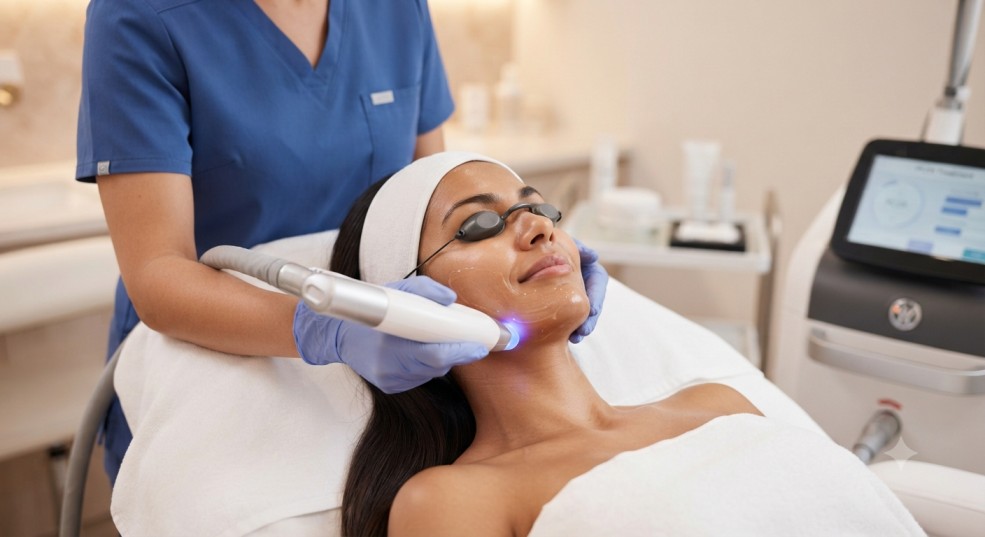
For many women dealing with Polycystic Ovary Syndrome (PCOS) or other hormonal fluctuations, managing unwanted facial and body hair feels like a relentless daily struggle. Shaving leads to quick stubble, waxing brings painful ingrown hairs, and bleaching offers only temporary camouflage.
When searching for a long-term solution, laser hair removal often emerges as the gold standard. However, individuals managing a laser hair removal pcos hormonal imbalance condition often realize early in their treatment journey that their progress looks different from standard treatment timelines. Where a friend might see near-total hair clearance after 6 to 8 sessions, someone with PCOS or high androgen levels might require 10, 12, or periodic maintenance visits.
At Esthetica Cosmetology, we believe that understanding the science behind your body’s endocrine system is the first step toward realistic, empowering, and lasting aesthetic results. In this comprehensive guide, we will break down why hormonal conditions alter the laser hair removal process, how light energy interacts with active follicles, and how you can optimize your personalized treatment plan for maximum success.
The Biology of Hair Growth: Hormones and Follicle Cycles
To understand why a laser hair removal pcos hormonal imbalance requires a customized timeline, it is essential to first look at how human hair grows and how hormones regulate that growth.
Hair growth occurs in three continuous phases:
Anagen (Growth Phase): The hair follicle is actively growing and tightly bound to the root and blood supply. This phase contains the highest concentration of melanin (pigment). Laser energy specifically targets hairs during the active Anagen phase.
Catagen (Transitional Phase): The hair stops growing and detaches from the dermal papilla.
Telogen (Resting Phase): The old hair rests while a new hair begins forming underneath before shedding.
Under standard biological conditions, only a fraction of your body hair is in the Anagen phase at any given time. This is why standard laser hair removal requires multiple sessions spread several weeks apart—to catch each wave of hair as it transitions into active growth.
How Androgens Disrupt the Cycle
Androgens, such as testosterone and dihydrotestosterone (DHT), are male hormones present in all women in smaller amounts. In conditions like Polycystic Ovary Syndrome (PCOS), congenital adrenal hyperplasia, or thyroid irregularities, androgen levels become elevated.
When excessive circulating androgens interact with androgen-sensitive hair follicles (typically on the chin, jawline, neck, chest, abdomen, and lower back), two major changes occur:
Vellus to Terminal Conversion: Soft, fine, barely visible “peach fuzz” (vellus hair) is converted into thick, dark, deeply rooted hair (terminal hair).
Follicle Awakening: Dormant, inactive hair follicles in the skin are constantly triggered to awaken and begin brand-new growth cycles.
Because androgen stimulation acts like a continuous “on switch” for new hair creation, treating hair removal in the presence of a hormonal imbalance requires a strategy tailored specifically to ongoing follicular activity.
Why Laser Hair Removal Needs Extra Sessions for PCOS and Hormonal Imbalance
Laser technology works on the principle of selective photothermolysis. The laser emits a specific wavelength of light absorbed by the melanin in the hair shaft. This light converts to thermal energy (heat), destroying the hair bulb and vaporizing the blood supply nourishing the follicle—preventing future growth.
However, when addressing a laser hair removal pcos hormonal imbalance, several key physiological factors change the dynamic of treatment:
+-------------------------------------------------------------------+
|               Hormonal Imbalance (High Androgens)                |
+-------------------------------------------------------------------+
                                  |
                                  v
+-------------------------------------------------------------------+
|   Triggers Vellus-to-Terminal Hair Conversion & Awakens Sleepers  |
+-------------------------------------------------------------------+
                                  |
                                  v
+-------------------------------------------------------------------+
|  New Follicles Continuously Activated Outside Normal Anagen Cycles |
+-------------------------------------------------------------------+
                                  |
                                  v
+-------------------------------------------------------------------+
| Requirement: Extra Laser Sessions + Maintenance at Esthetica     |
+-------------------------------------------------------------------+
1. Continuous Follicle Activation
Standard laser treatments effectively destroy active follicles present during a session. However, laser energy cannot destroy follicles that have not yet developed dark pigment or begun growing. In a person with PCOS, high androgen levels continuously signal dormant, non-pigmented follicles to transform into active terminal hair producers. Thus, while your laser sessions successfully remove one generation of hair, your internal chemistry is actively generating a new layer.
2. Deeply Rooted and Dense Follicles
Hormonally induced hair growth (hirsutism) is often thicker, coarser, and rooted deeper within the dermis than normal body hair. Reaching these deeply set roots requires precise laser wavelengths, higher thermal energies, and consistent treatments over time to incrementally weaken the vascular supply of each strong follicle.
3. Paradoxical Hypertrichosis Risk
In rare instances, applying low levels of heat energy to fine vellus hairs in androgen-sensitive zones (like the neck or cheeks) can stimulate localized blood flow and trigger increased hair growth—a phenomenon known as paradoxical hypertrichosis. At Esthetica Cosmetology, our experienced practitioners adjust laser parameters, fluence levels, and cooling mechanisms specifically to prevent this occurrence on sensitive facial skin.
Managing Expectations: Hair Reduction vs. Permanent Cure
A common misconception is that laser hair removal guarantees 100% permanent removal of every single hair forever. Medically, laser hair removal is classified as permanent hair reduction.
For individuals without hormonal conditions, laser treatments typically achieve an 80% to 90% reduction in hair density, with remaining hairs growing back finer and lighter.
For clients managing a laser hair removal pcos hormonal imbalance:
Laser hair removal is exceptionally effective at reducing hair density, slowing growth rate, eliminating painful ingrown hairs, and improving skin texture.
However, because laser treatments address the hair at the skin surface and root level—without altering internal endocrine hormone production—periodic maintenance sessions (typically 1 to 3 times a year) are necessary to target newly activated follicles.
When combined with internal medical management prescribed by your physician or endocrinologist, laser treatments yield life-changing results for self-confidence and daily skin comfort.
How Esthetica Cosmetology Tailors Your Laser Plan
At Esthetica Cosmetology, we recognize that no two hormonal profiles or skin tones are identical. Managing hirsutism requires a personalized clinical protocol built around your unique health background.
Customized Clinical Assessment
Before beginning your treatment journey, our specialists conduct a thorough evaluation of your hair coarseness, skin phototype, and medical background. Understanding whether you have diagnosed PCOS, thyroid imbalances, or irregular cycles helps us set accurate session expectations right from day one.
Advanced Medical-Grade Technologies
We utilize medical-grade laser platforms featuring diode and Nd:YAG wavelengths. Nd:YAG lasers (1064 nm) safely bypass surface epidermal melanin to target deep-seated dark hair roots, making them ideal for coarse, hormonally driven hair across all skin tones, including darker complexions.
Flexible Session Intervals
While standard laser protocols schedule appointments 4 to 6 weeks apart, clients dealing with a laser hair removal pcos hormonal imbalance may require customized timing. As growth slows down and new follicle waves emerge, our team adjusts your appointment intervals to capture hair precisely in its active Anagen growth phase.
Actionable Tips to Optimize Your Treatment Results
If you are undergoing laser treatments while managing PCOS or a hormonal condition, applying these practical strategies can maximize your outcomes and ensure smooth, healthy skin throughout your journey:
Coordinate Internal and External Care: Work alongside an endocrinologist or gynecologist. Medical treatments that help regulate androgen levels (such as anti-androgen therapies, oral contraceptives, or dietary adjustments) complement external laser care by slowing down the signal that creates new hair follicles.
Never Wax or Pluck Between Sessions: Shaving is the only approved method for hair removal during your laser journey. Waxing, tweezing, and threading pull the root out from the follicle, leaving no target target melanin for the laser energy to destroy.
Keep a Growth Journal: Track how quickly hair resurfaces between sessions. Sharing this feedback with your practitioner at Esthetica Cosmetology helps us refine energy fluences and pulse durations for maximum effectiveness.
Maintain Strict Sun Protection: Keep treated areas protected with a broad-spectrum SPF 50 sunscreen. Sun exposure increases skin sensitivity and pigment reaction risks, which can temporarily delay scheduled laser treatments.
Commit to Consistency: Missing scheduled sessions allows growing hairs to pass through their optimal Anagen phase untouched, extending your overall timeline.
Frequently Asked Questions (FAQs)
Does laser hair removal work if I have PCOS?
Yes, laser hair removal is highly effective for individuals with PCOS. While it requires more sessions than standard treatments and periodic long-term maintenance, it drastically reduces hair density, eliminates stubble, prevents ingrown hairs, and restores skin smoothness.
How many sessions will I need for PCOS-related hair removal?
While non-hormonal hair removal usually takes 6 to 8 sessions, a laser hair removal pcos hormonal imbalance profile typically requires 10 to 14 sessions for initial clearance, followed by touch-up treatments 1 to 3 times per year.
Can laser hair removal cause more hair growth in PCOS patients?
If treated improperly with low heat settings on fine vellus hair, light stimulation can occasionally trigger localized growth (paradoxical hypertrichosis). At Esthetica Cosmetology, we use precise medical-grade wavelengths and expert parameters tailored for androgen-sensitive zones to minimize this risk.
Is laser hair removal painful for sensitive PCOS skin?
Most modern laser systems integrate advanced cooling technologies that chill the outer skin layer before and during each pulse, making treatment comfortable and well-tolerated even on sensitive facial areas.
Take Control of Your Skin Journey Today
Living with PCOS or hormonal imbalances should not mean compromising on smooth, radiant skin or daily confidence. While your body’s unique endocrine profile means your journey may require extra sessions and ongoing care, achieving smooth, hair-free skin is entirely achievable with the right expertise and medical-grade technology.
At Esthetica Cosmetology, our compassionate specialists are dedicated to creating a supportive, customized treatment plan tailored specifically to your needs. Contact our clinical team today to book your personalized consultation and take the first step toward lasting confidence.