

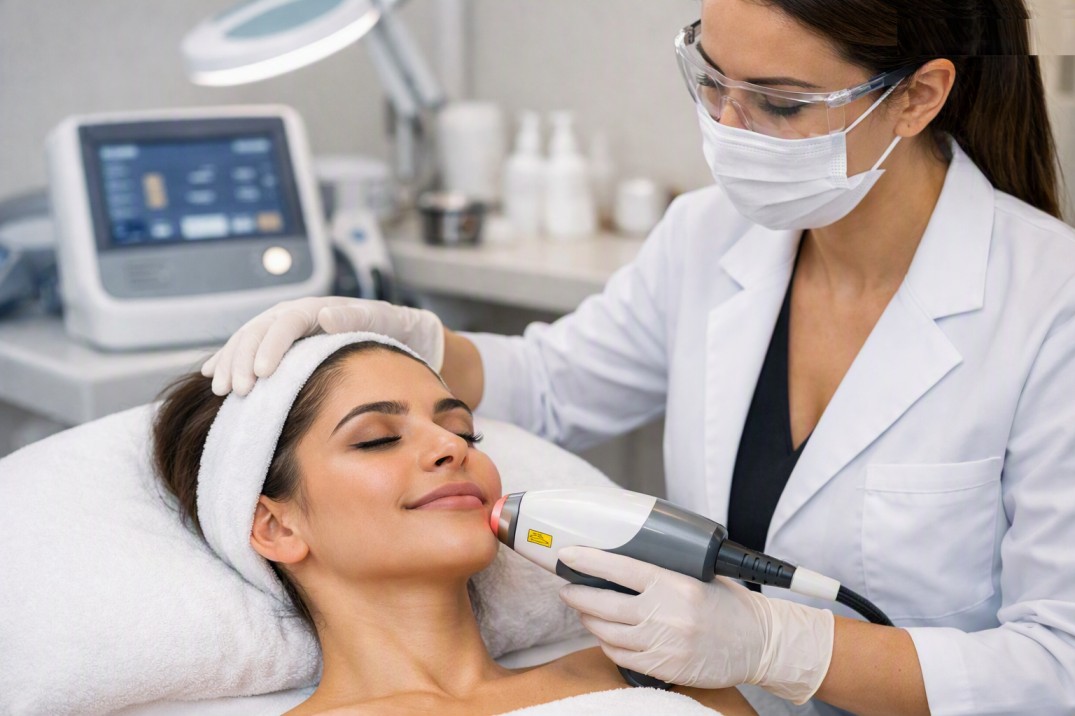
Despite being one of the most popular, clinically proven aesthetic treatments worldwide, laser hair reduction is still surrounded by outdated rumors and online misinformation. From fears of excruciating pain to misconceptions about skin damage or hair growing back thicker, hesitation often keeps people trapped in an endless cycle of painful waxing, razor burns, and ingrown hairs.
Understanding the real laser hair removal myths and facts is the first step toward making a confident, safe decision for your skin. At Esthetica Cosmetology, our specialists frequently meet clients across Mohali and Chandigarh who wish they had started their sessions years earlier once they experience how gentle and effective modern technology truly is. Let’s separate clinical truth from fiction and examine everything you need to know about modern laser hair reduction.
How Modern Laser Hair Removal Actually Works
Before diving into laser hair removal myths and facts, it helps to understand the basic science behind the procedure. Medical-grade laser systems emit a concentrated, specific wavelength of light that is selectively absorbed by melanin (the pigment) inside the hair follicle.
This light energy converts into controlled thermal energy, gently disabling the follicle’s ability to produce new hair—all while leaving the surrounding skin tissue completely untouched. Because hair grows in distinct cycles (anagen, catagen, and telogen), a series of scheduled sessions targets follicles during their active growth phase, delivering up to 80–90% permanent hair reduction.
Top 8 Laser Hair Removal Myths and Facts You Need to Know
Myth 1: Laser Hair Removal Is Extremely Painful
Fact: Modern FDA-approved laser systems are virtually painless and far more comfortable than waxing.
One of the most persistent laser hair removal myths and facts debates revolves around discomfort. While early-generation lasers from decades ago felt like sharp snaps against the skin, today’s advanced diode and triple-wavelength platforms feature integrated sapphire cooling tips. At Esthetica Cosmetology, the handpiece continuously cools the epidermis on contact, reducing the sensation to a mild, warm tingling feeling—even on sensitive areas like the upper lip, underarms, or bikini line.
Myth 2: Laser Hair Removal Causes Skin Cancer or Internal Organ Damage
Fact: Cosmetic lasers use non-ionizing radiation that penetrates only a few millimeters into the skin.
Unlike X-rays or UV rays, medical aesthetic lasers emit non-ionizing light energy. This wavelength is specifically calibrated to reach only the superficial dermal layer where hair follicles reside (roughly 1 to 4 millimeters deep). It never reaches internal organs, lymph nodes, or reproductive tissues, and it has zero link to cellular DNA mutation or skin cancer.
Myth 3: Laser Hair Removal Is Unsafe for Indian and Darker Skin Tones
Fact: Advanced triple-wavelength and Nd:YAG technologies are specifically engineered for melanin-rich skin.
Years ago, older lasers struggled to distinguish between pigment in the hair shaft and pigment in the surrounding epidermis, increasing burn risks for medium-to-deep skin tones. Modern clinical technology has completely solved this challenge. By utilizing longer, precisely calibrated wavelengths alongside dynamic cooling, dermatological lasers bypass surface melanin safely and target only the deep follicle root—making treatment completely safe for Indian skin tones.
Myth 4: Hair Grows Back Thicker, Darker, and Faster After Laser Sessions
Fact: Laser energy weakens and miniaturizes follicles, making regrowth finer, lighter, and sparser.
This myth stems from shaving between sessions, which cuts hair blunt at the surface and creates a temporary stubbly feel. In reality, laser therapy damages the follicle’s blood supply and regenerative cells. With each completed session, any remaining hair grows back noticeably thinner, softer, and slower until most follicles stop producing hair altogether.
Myth 5: One or Two Sessions Are Enough for Permanent Results
Fact: A structured course of 6 to 8 sessions is required to target every hair growth cycle.
At any given moment, only about 15% to 20% of your body hair is in the active growth phase (anagen)—the only stage where the hair shaft is firmly attached to the root and receptive to laser energy. Spacing sessions 4 to 6 weeks apart ensures that dormant follicles enter the active phase and get treated effectively.
Myth 6: Laser Hair Removal Causes Severe Burns, Scarring, or Permanent Pigmentation
Fact: Side effects are minimal and temporary when performed with FDA-approved equipment by trained professionals.
The vast majority of adverse laser reactions occur at unregulated salons using uncertified, low-grade machines operated without proper skin-type calibration. When performed at an established medical clinic like Esthetica Cosmetology, settings are customized to your exact Fitzpatrick skin type and hair thickness. Temporary mild redness (perifollicular edema) around the follicles is completely normal and typically subsides within a few hours.
Myth 7: You Can Wax or Pluck Between Laser Sessions
Fact: Shaving is encouraged, while waxing, threading, and plucking must be strictly avoided.
For the laser to work, the hair root must remain intact inside the follicle to absorb light energy. Waxing, epilating, or tweezing rips the root out completely, rendering your upcoming laser session ineffective. Shaving trims only the surface hair while leaving the root intact beneath the skin—and actually helps the laser deliver energy directly to the follicle without wasting heat on surface hair.
Myth 8: Laser Hair Removal Is Only for Women
Fact: Men represent one of the fastest-growing demographics for clinical laser hair reduction.
From defining beard lines and eliminating painful razor bumps on the neck to reducing thick chest, back, or shoulder hair, men increasingly choose laser treatments for long-term hygiene, comfort, and grooming convenience.
Laser Hair Removal vs. Traditional Hair Removal Methods
Comparing clinical laser reduction against common at-home and salon routines highlights why so many people in Mohali are making the switch:
| Comparison Factor | Clinical Laser Hair Reduction | Waxing & Threading | Shaving & Depilatory Creams |
| Long-Term Results | 80–90% permanent hair reduction after full course | Temporary (regrowth in 2–3 weeks) | Very short-term (regrowth in 1–3 days) |
| Comfort Level | Mild warmth with built-in cooling tips | High pain; pulls skin and hair roots | Painless, but high risk of nicks & chemical burns |
| Ingrown Hairs & Bumps | Eliminates ingrown hairs and strawberry legs | Frequently causes ingrown hairs and folliculitis | High incidence of razor bumps and dark patches |
| Skin Texture Impact | Leaves skin smoother, clearer, and even-toned | Repeated pulling can cause laxity and pigmentation | Causes stubble, dryness, and friction darkening |
| Lifetime Cost | Cost-effective one-time investment | Expensive recurring monthly cost for decades | Ongoing cost of razors, foams, and creams |
Essential Safety Checklist Before Booking Your Laser Session
To ensure maximum safety and visible results, always verify these clinical standards before starting treatment:
FDA-Approved Technology: Confirm the clinic uses authentic, medical-grade laser devices rather than generic IPL (Intense Pulsed Light) machines.
Personalized Skin & Hair Assessment: Your provider should evaluate your skin tone, hair coarseness, and hormonal profile (such as PCOS) before setting energy levels.
Patch Test Protocol: A reputable clinic always performs a small patch test first to verify how your skin responds to the laser parameters.
Strict Sun Protection: Avoid direct tanning or harsh sun exposure for two weeks before and after each session, and wear broad-spectrum SPF 50 daily on exposed treated areas.
Frequently Asked Questions (FAQs)
1. What are the real side effects of laser hair removal?
When performed properly with medical-grade technology, side effects are mild and short-lived. You may notice slight pinkness or tiny bumps around the hair follicles immediately after treatment—a positive clinical sign that the follicle absorbed the laser energy. This settles naturally within 2 to 24 hours with soothing aloe vera or post-laser calming gel.
2. Is laser hair removal safe if I have PCOS or hormonal hair growth?
Yes, laser hair removal is one of the most effective ways to manage unwanted facial and body hair caused by PCOS (Polycystic Ovary Syndrome). While hormonal fluctuations can stimulate new dormant follicles over time—meaning you may benefit from occasional maintenance touch-ups—laser therapy dramatically reduces coarse hair density and restores confidence.
3. How should I prepare for my laser hair removal appointment at Esthetica Cosmetology?
Shave the treatment area cleanly 12 to 24 hours before your appointment, avoid applying lotions, deodorants, or perfumes on the day of your session, and skip active exfoliants (like retinoids or glycolic acid) on the area for 3 to 5 days prior.
4. Does laser hair removal work on white, grey, or very fine blonde hair?
Because laser light targets melanin pigment inside the follicle, traditional lasers work best on dark brown or black hair. Very light blonde, grey, or white hairs lack sufficient pigment to absorb the laser energy effectively, which is why an in-person consultation is essential to set realistic expectations.
Conclusion: Experience Safe, Pain-Free Laser Hair Reduction at Esthetica Cosmetology
Now that you know the true laser hair removal myths and facts, it is easy to see why medical-grade laser technology has become the gold standard for smooth, carefree skin. Free from the pain of waxing, the irritation of razor burn, and the frustration of stubborn ingrown hairs, clinical laser hair reduction delivers safe, predictable, and lasting freedom.
Ready to ditch the razor for good? Visit Esthetica Cosmetology in Phase 11, Sector 65, Mohali, or explore our advanced aesthetic services at estheticacosmetology.com. Schedule your personalized consultation and patch test today to experience safe, comfortable, FDA-approved laser hair reduction tailored to your skin.