

Your skin is a living, dynamic organ that constantly responds to external shifts in temperature, humidity, UV intensity, and indoor climate control. Yet, one of the most common mistakes in modern skincare is sticking rigidly to the exact same products and clinic treatments all twelve months of the year—or conversely, overhauling an entire regimen every time the weather fluctuates for a couple of days. This leads many skincare enthusiasts to ask: how often should I change my facial routine according to weather changes?
The ideal dermatological answer is four times a year—aligned with the four primary seasonal transitions (spring, summer, monsoon/high-humidity months, and autumn/winter)—alongside minor micro-adjustments whenever you travel to a drastically different climate. At Esthetica Cosmetology, we emphasize that updating your routine does not mean throwing out every bottle on your bathroom shelf. Instead, it means strategically swapping texture weights, exfoliation frequencies, and professional in-clinic facial protocols so your skin barrier remains balanced, hydrated, and breakout-free year-round. Let’s explore the exact science behind seasonal skin adaptation and how to time every transition smoothly.
Why Weather Shifts Demand Skincare Adjustments
To understand how often should I change my facial routine according to weather changes, it helps to look at how environmental variables alter your skin’s physiological behavior beneath the surface:
-
Ambient Humidity and Transepidermal Water Loss (TEWL): When air humidity drops below 40% during crisp autumn and winter months, dry air pulls moisture directly out of your stratum corneum. Without richer emollients and occlusives to seal in hydration, your lipid barrier develops microscopic cracks, triggering tightness, flaking, and heightened sensitivity.
-
Temperature and Sebum Production: Dermatological studies demonstrate that for every 1°C increase in skin surface temperature, sebum excretion rises by approximately 10%. During hot summer and humid monsoon conditions, overactive sebaceous glands produce thicker oil that mixes with sweat and pollutants, leading to congested pores and inflammatory breakouts.
-
UV Index and Oxidative Stress: Higher UV radiation in spring and summer accelerates free-radical damage, triggers melanin overproduction (tanning and dark spots), and breaks down dermal collagen faster than in cooler months.
-
Indoor Microclimates: Heavy reliance on air conditioning in summer and indoor heaters in winter strips ambient moisture regardless of outdoor temperatures, creating a mismatch between surface oiliness and deep cellular dehydration.
The 4-Season Skincare Blueprint: When and What to Change
Rather than reacting impulsively to single-day weather swings, plan structured, gradual transitions at the start of each major season. At Esthetica Cosmetology, our skin specialists guide clients through four distinct seasonal shifts:
1. Spring Transition (Warming Temperatures and Rising Allergens)
As winter chill fades into milder spring weather, your skin gradually begins producing more natural lipids while shedding accumulated winter dryness.
-
What to Swap: Trade heavy, butter-rich winter creams for medium-weight lotion or ceramide-gel moisturizers.
-
Active Focus: Introduce gentle chemical exfoliation (such as lactic acid or low-strength glycolic acid) once or twice weekly to buff away dull winter dead skin cells.
-
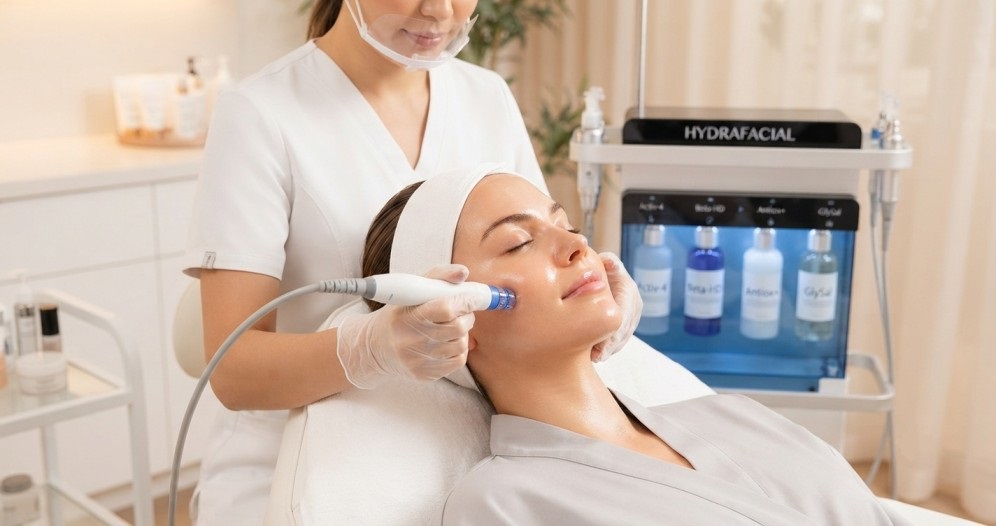
Clinic Facial Shift: Book a brightening, gentle resurfacing treatment—like a customized Hydra Facial—to clear winter buildup and prep your skin for brighter daylight hours.
2. Summer Transition (High Heat, Intense UV, and Excess Sebum)
Peak summer heat ramps up sweat and oil output while exposing your skin to maximum UV radiation.
-
What to Swap: Switch from creamy or milky cleansers to a gentle, sulfate-free foaming or salicylic acid gel cleanser that dissolves excess sebum without stripping your acid mantle. Replace rich moisturizers with oil-free, water-based hyaluronic acid gels.
-
Active Focus: Prioritize morning antioxidant serums (such as Vitamin C or niacinamide) layered underneath a broad-spectrum SPF 50 PA++++ sunscreen to neutralize UV-induced free radicals and regulate shine.
-
Clinic Facial Shift: Schedule monthly deep pore-purifying and oil-balancing treatments to flush out waterproof sunscreen residue, sweat, and oxidized sebum before blackheads form.
3. Monsoon / High-Humidity Transition (Sticky Air and Fungal/Bacterial Congestion)
In regions experiencing intense monsoon humidity, moisture hangs heavily in the air, slowing sweat evaporation and creating a warm environment where acne-causing bacteria and surface congestion thrive.
-
What to Swap: Keep textures ultra-lightweight and strictly non-comedogenic. Avoid heavy facial oils and thick occlusive balms that trap sweat against pores.
-
Active Focus: Incorporate pore-clarifying ingredients like niacinamide, green tea extract, or mild BHA (salicylic acid) toners to prevent humid-weather breakouts and T-zone congestion.
-
Clinic Facial Shift: Focus on antibacterial, calming hydro-dermabrasion and LED light therapy sessions at Esthetica Cosmetology to keep pores clear without aggressive manual squeezing.
4. Autumn & Winter Transition (Dropping Humidity and Barrier Stress)
When crisp winds arrive and humidity plummets, sebum production slows dramatically while transepidermal water loss accelerates.
-
What to Swap: Retire stripping foaming cleansers in favor of hydrating, pH-balanced cream or micellar cleansers. Upgrade lightweight gels to nourishing barrier-repair moisturizers rich in ceramides, squalane, peptides, and glycerin.
-
Active Focus: Dial back strong exfoliating acids and high-strength retinoids if your skin feels tight or flaky, focusing instead on moisture replenishment and lipid restoration.
-
Clinic Facial Shift: Transition to deeply hydrating, collagen-supporting clinical facials with peptide and hyaluronic acid infusion to prevent winter dullness and fine dehydration lines.
| Season | Primary Skin Challenge | Cleanser & Moisturizer Swap | Key Active Ingredients | Recommended Clinic Focus |
| Spring | Lingering winter dullness & pollen sensitivity | Creamy cleanser to gentle gel; heavy cream to light lotion | Lactic acid, low-dose Vitamin C, panthenol | Gentle exfoliation & radiance reset |
| Summer | Excess sebum, sweat, clogged pores & high UV | Foaming/salicylic cleanser; oil-free hyaluronic water gel | Niacinamide, Vitamin C, broad-spectrum SPF 50 | Deep pore extraction & oil-control Hydra Facial |
| Monsoon / Humid | Sticky congestion, blackheads & humidity breakouts | Purifying gel cleanser; featherlight non-comedogenic fluid | Salicylic acid (BHA), zinc PCA, soothing centella | Antibacterial purification & calming infusion |
| Autumn / Winter | Dryness, flaking, barrier cracks & tightness | Hydrating milk/cream cleanser; rich ceramide & squalane cream | Ceramides, hyaluronic acid, peptides, squalane | Deep barrier repair & intense moisture infusion |
5 Warning Signs Your Skin Needs a Weather-Based Routine Change Now
Even if the calendar has not officially turned to a new season, your skin will send unmistakable signals whenever its current routine no longer matches your environment:
-
Tightness Within 15 Minutes of Washing: If your face feels dry, stretched, or uncomfortable shortly after cleansing, your cleanser is too stripping or your moisturizer lacks sufficient lipid protection for the current humidity level.
-
Sudden Midday Grease Despite Using Your Usual Products: When your T-zone turns shiny hours earlier than normal, rising temperatures are triggering excess sebum that requires lighter, water-based hydration.
-
Makeup Pilling, Patchiness, or Clinging to Dry Flakes: Foundation separating over dry patches signals surface dehydration and accumulated dead cells, while sliding makeup points to excess surface oil.
-
Unexpected Tiny Bumps or Congested Pores: Switching from dry to humid air while continuing to use heavy winter creams quickly traps sweat and oil inside follicles.
-
Stinging When Applying Normally Gentle Products: Mild tingling or redness from your everyday moisturizer indicates a compromised skin barrier stressed by cold wind, dry indoor heating, or excessive sun exposure.
How to Transition Your Skincare Routine Without Shocking Your Skin
Knowing how often should I change my facial routine according to weather changes is only half the equation—how you introduce those swaps matters just as much. Changing four or five products simultaneously can overwhelm your skin barrier and make it impossible to identify what caused irritation if a breakout occurs.
Follow these practical transition rules recommended by the skincare experts at Esthetica Cosmetology:
-
Make One Swap Every 5 to 7 Days: Start by adjusting your moisturizer weight first, followed a week later by your cleanser, and finally your targeted treatment serums.
-
Keep Your Core Foundation Consistent: Regardless of the season, three pillars remain non-negotiable year-round: a gentle pH-balanced cleanser, targeted hydration, and daily broad-spectrum sunscreen (UV rays penetrate clouds and windows even in winter).
-
Layer Instead of Replacing Completely: During unpredictable transitional weeks—when mornings are chilly and afternoons feel warm—layer a hydrating hyaluronic acid serum underneath a medium-weight moisturizer rather than switching to a heavy occlusive cream overnight.
-
Align Professional Facials With Seasonal Shifts: Booking a clinical skin assessment and customized facial every 4 to 6 weeks allows your aesthetician to adjust peel strengths, vacuum extraction intensity, and antioxidant booster serums in real time as the weather shifts.
Frequently Asked Questions
Should I change my skincare routine if the weather fluctuates for just two or three days?
No. Short-term weather blips do not require buying new products. Instead, adjust how you layer what you already own—for example, applying an extra drop of hydrating serum on an unusually dry day or blotting excess oil on a warm afternoon—and reserve full product swaps for sustained seasonal shifts lasting two weeks or longer.
Do I still need sunscreen when changing my routine for winter or cloudy monsoon weather?
Yes, without exception. Up to 80% of UVA rays—the wavelengths responsible for premature aging, collagen breakdown, and hyperpigmentation—pass right through cloud cover and window glass year-round. Keep broad-spectrum SPF 30 to 50 in your morning routine every single day, adjusting only the texture (such as a hydrating cream SPF in winter versus a matte gel SPF in summer).
How often should I change my professional clinic facials across the year?
While your core monthly schedule (once every 4 weeks) stays consistent to match your skin’s natural 28-day cellular turnover cycle, the customized boosters and steps inside your facial should shift each season. At Esthetica Cosmetology, we tailor your Hydra Facial or clinical skin therapy each visit—focusing on deep salicylic pore clarification in summer and intense ceramide-peptide hydration in winter.
Conclusion
So, how often should I change my facial routine according to weather changes? Aim for four thoughtful, gradual seasonal transitions each year—adapting your cleanser, moisturizer weight, exfoliation cadence, and clinical facial focus to match shifts in temperature, humidity, and UV exposure. By listening to your skin’s subtle cues and making smart, step-by-step adjustments rather than drastic overnight overhauls, you keep your lipid barrier resilient, balanced, and glowing through every climate shift.
Want expert guidance on tailoring both your daily home regimen and monthly clinical treatments to the upcoming season? Book a personalized skin analysis and customized seasonal facial at Esthetica Cosmetology today.