

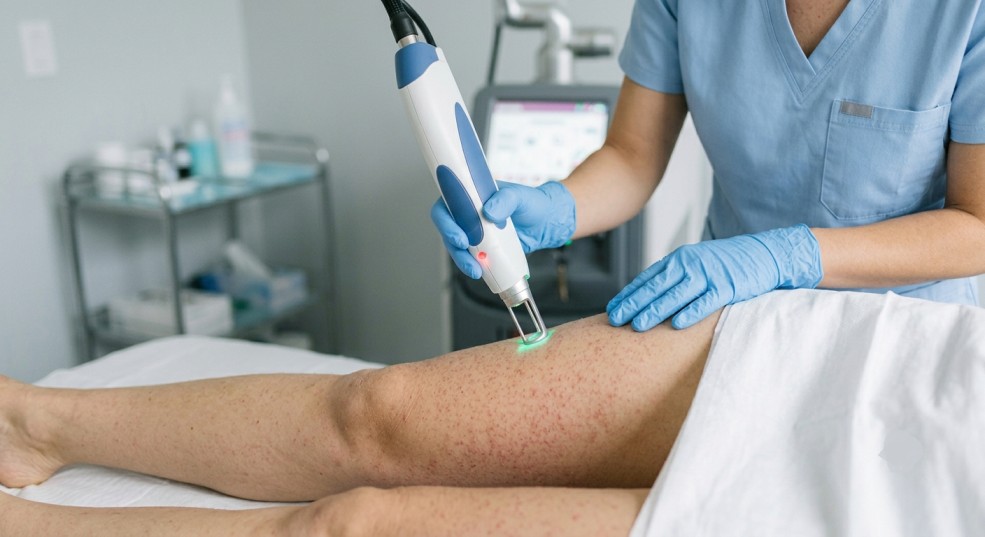
Starting a laser hair reduction journey is an exciting investment in smooth, carefree skin, yet seeing stray hairs emerge a few weeks after an appointment often catches beginners off guard. When facial fuzz appears before a family event or leg hair feels stubbly mid-cycle, many clients immediately reach for their usual salon habits and ask: can I wax or thread between my laser hair removal sessions?
The short, unequivocal clinical answer is no—you must strictly avoid waxing, threading, plucking, or epilating at any point during your laser treatment course. At Esthetica Cosmetology, we emphasize this rule during every initial consultation because pulling hair out from the root directly sabotages the biological mechanism that makes laser hair reduction work. Doing so not only wastes the time and money invested in your upcoming session, but can also stimulate thicker regrowth and irritate sensitized skin. Let’s explore the exact dermatological science behind why root-pulling methods interfere with laser energy, how the hair growth cycle dictates your results, and what safe, approved alternatives keep you smooth between appointments.
The Science Behind Why Waxing and Threading Ruin Laser Results
To understand why can I wax or thread between my laser hair removal sessions is always met with a firm no from dermatologists, you need to look at how a medical laser actually locates and disables hair beneath your skin.
How Selective Photothermolysis Works
Laser hair reduction relies on a clinical principle called selective photothermolysis. During your appointment, a concentrated beam of light travels through the epidermis and is absorbed specifically by melanin—the dark pigment concentrated inside the hair shaft and bulb. That light energy instantaneously converts into controlled thermal heat, traveling down the hair shaft like a lightning rod to cauterize the dermal papilla (the blood supply and stem cells responsible for growing new hair).
What Happens When You Pull the Root Out
Waxing, threading, tweezing, and mechanical epilators physically rip the entire hair shaft and bulb out of the follicle cavity. When you walk into your next appointment at Esthetica Cosmetology after waxing or threading:
There Is No Target Left for the Laser: Without a melanin-rich hair shaft sitting inside the follicle to absorb light and conduct heat down to the root, the laser beam passes harmlessly through empty skin without disabling the follicle’s growth center.
Your Treatment Schedule Gets Reset: Instead of progressing toward permanent reduction, your session becomes largely ineffective because the follicle survives intact and simply grows a brand-new hair a few weeks later.
Stimulation of Dormant Follicles: Physical trauma and localized blood rush caused by ripping hair from the root—especially via facial threading on the upper lip, chin, or jawline—can actually trigger vellus (fine) follicles to convert into thicker, darker terminal hairs.
Understanding the Hair Growth Cycle and Session Timing
Every single hair follicle on your body operates independently through three distinct biological phases. Because laser energy can only permanently disable hairs currently anchored in the active growth stage, spacing your sessions 4 to 6 weeks apart is essential:
Anagen Phase (Active Growth Stage): The hair is visibly attached to the dermal papilla and packed with rich melanin. Only hairs in the anagen phase can be permanently disabled by a laser. At any given moment, roughly 15% to 25% of your body hair is in this stage.
Catagen Phase (Transitional Stage): The hair shaft detaches from its blood supply and stops actively growing, making thermal destruction ineffective.
Telogen Phase (Resting & Shedding Stage): The old hair rests inside the follicle before naturally falling out as a new anagen hair begins forming underneath.
When you wax or thread between appointments, you disrupt this natural synchronization, forcing follicles into irregular, staggered resting phases so fewer hairs are ever present in the vulnerable anagen stage during your scheduled clinic visits.
| Hair Removal Method Between Sessions | Impact on Hair Root | Effect on Next Laser Session | Skin Barrier & Sensitivity Risk | Verdict |
| Shaving (Clean Razor) | Leaves root intact beneath surface | 100% Compatible — preserves laser target | Low (when done gently 3+ days post-laser) | Approved & Recommended |
| Trimming (Electric Trimmer) | Cuts hair above skin; root untouched | 100% Compatible — zero interference | Minimal to zero friction on epidermis | Approved & Safe |
| Hot / Strip Waxing | Rips out entire hair bulb from follicle | Destroys Target — renders laser ineffective | High risk of burns, peeling & hyperpigmentation | Strictly Prohibited |
| Facial Threading | Pulls root out via twisted cotton thread | Destroys Target — resets treatment progress | High risk of folliculitis & paradoxical hair growth | Strictly Prohibited |
| Tweezing / Epilating | Plucks individual follicles from root | Destroys Target — causes patchy results | Triggers ingrown hairs and follicle inflammation | Strictly Prohibited |
| Depilatory Creams | Dissolves hair chemically near surface | Disrupts pH & sensitizes treated follicles | High risk of chemical burns on lasered skin | Avoid |
Safe, Dermatologist-Approved Ways to Manage Hair Between Sessions
Just because waxing and threading are off-limits does not mean you have to walk around feeling self-conscious about visible regrowth between appointments. At Esthetica Cosmetology, our specialists recommend two completely safe, effective methods to stay smooth throughout your treatment plan:
1. Shaving With a Clean, Sharp Razor
Shaving cuts the hair shaft cleanly at the surface of the skin while leaving the root safely anchored inside the follicle beneath the epidermis. Because the internal target remains intact, you can shave as often as you like between sessions without reducing the effectiveness of your laser treatment.
Wait 3 to 5 Days Post-Treatment: Always allow any temporary redness or follicle sensitivity from your laser session to subside completely before running a blade over your skin.
Use Proper Technique: Soften hairs in a lukewarm shower, apply a fragrance-free hydrating shaving gel, shave gently in the direction of hair growth, and moisturize afterward with a soothing ceramide or aloe-based lotion.
Shave 24 Hours Before Your Next Appointment: Arriving with freshly shaved skin ensures laser energy focuses beneath the surface rather than singeing surface hair.
2. Gentle Electric Trimming for Delicate Facial Areas
Many clients feel nervous about shaving facial zones like the upper lip, chin, or sideburns due to the persistent myth that shaving makes hair grow back thicker. While shaving merely creates a blunt tip that feels coarser temporarily—without ever altering follicle thickness—if you still prefer not to use a blade on your face, a compact electric facial trimmer is a fantastic alternative. It trims hair flush with the skin without pulling the root or scraping the skin barrier.
Understanding Post-Laser “Shedding” vs. True Regrowth
One reason people mistakenly book a waxing or threading appointment 10 to 14 days after laser hair reduction is that they see dark hairs emerging and assume the treatment failed. In reality, what you are witnessing is post-laser hair shedding—proof that your session worked!
As the disabled follicle heals and pushes the dead hair shaft upward out of the pore over 7 to 21 days, those hairs appear to grow longer before effortlessly falling out. Instead of reaching for tweezers or thread:
Gently exfoliate the area with a soft, damp washcloth during your shower starting 7 days after treatment to help loose hairs slide out cleanly.
Notice how each subsequent cycle brings noticeably finer, softer, slower-growing hair with patchy bare areas—meaning you will need to shave less and less as your sessions progress.
What Happens If You Accidentally Waxed or Threaded Before Your Session?
Life happens—maybe you forgot the rule before a wedding or out-of-town trip and had your upper lip threaded or legs waxed. If this occurs, do not hide it from your practitioner.
Inform your specialist at Esthetica Cosmetology right away so we can reschedule your upcoming appointment by 3 to 4 weeks. Waiting allows the pulled hair follicles enough time to regenerate new anagen hair shafts beneath the skin, ensuring that when you return to the treatment chair, every laser pulse delivers full clinical value rather than firing at empty pores.
Frequently Asked Questions
Does shaving facial hair between laser sessions make it grow back thicker or darker?
No. This is one of the most common skincare myths. Shaving slices the hair shaft horizontally at the surface, creating a blunt edge that can feel slightly firmer to the touch as it emerges, but it has zero effect on the follicle’s root, growth speed, pigment, or thickness. Meanwhile, each laser session actively shrinks and weakens the follicle so regrowth becomes progressively finer.
How soon after a laser hair removal session can I shave?
You should wait at least 3 to 5 days after your laser appointment before shaving, giving your hair follicles and skin barrier ample time to calm down. Once any mild pinkness or warmth has resolved, you can shave safely whenever needed until 24 hours prior to your next session.
Why is threading especially bad for facial laser hair reduction?
Facial skin—particularly along the chin, jawline, and sideburns—is hormonally sensitive. Threading creates repeated micro-trauma and inflammation around fine vellus follicles, which can stimulate paradoxical hypertrichosis (where fine peach fuzz turns into coarse, dark hair) while simultaneously removing the root the laser needs to target. Switching exclusively to trimming or shaving between sessions protects both your skin and your results.
Conclusion
So, can I wax or thread between my laser hair removal sessions? Never—pulling hair out from the root removes the exact melanin target your laser relies on to disable the follicle permanently, delaying your results and risking unnecessary skin irritation. By sticking exclusively to gentle shaving or electric trimming between appointments and trusting the natural post-laser shedding process, you allow every single session to build steadily toward smooth, carefree, hair-free skin.
Have questions about preparing for your next appointment or customizing a laser hair reduction plan for your skin and hair type? Book your consultation with the expert team at Esthetica Cosmetology today.