

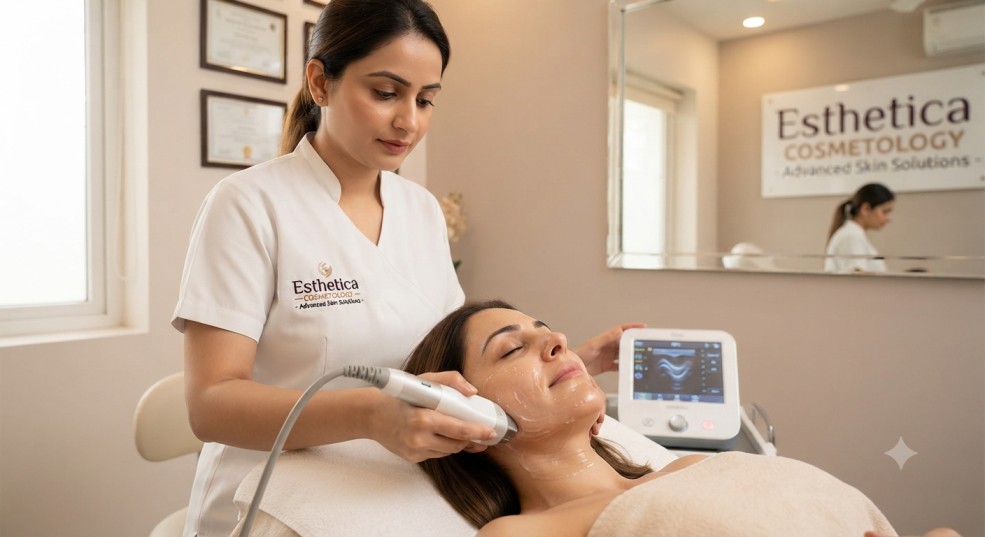
The demand for effective, non-invasive facial rejuvenation treatments has surged dramatically over the past decade. Modern aesthetic medicine allows individuals to tighten loose skin, restore defined contours, and reduce fine lines without undergoing invasive surgery or enduring extended recovery times.
Among the leading options on the market, HIFU (High-Intensity Focused Ultrasound) and Thermage (Radiofrequency energy) consistently dominate conversations surrounding non-surgical lifts. Both modalities promise firmer skin, boosted collagen production, and natural-looking results. However, they achieve these outcomes through distinct technologies, targeting different dermal layers and specific aesthetic concerns.
When evaluating a HIFU vs Thermage skin tightening comparison, understanding how each energy source interacts with tissue is vital. At Esthetica Cosmetology, our clinical approach focuses on matching advanced technology with individual skin biology to yield optimal cosmetic outcomes. This detailed guide breaks down everything you need to know about both treatments to help you decide which path aligns best with your cosmetic goals.
Understanding Non-Surgical Skin Tightening
As skin ages, structural proteins such as collagen and elastin gradually diminish. Environmental stressors, intrinsic aging, and gravity further contribute to tissue laxity, resulting in jowls, drooping brows, softened jawlines, and fine wrinkles around the eyes and neck.
Non-surgical skin tightening devices function by delivering controlled thermal energy into target tissue layers. This intentional micro-heating creates precise thermal coagulation points or deep tissue heating, triggering a natural wound-healing response. As the body repairs these microscopic areas over weeks and months, new collagen fibers form—a process known as neocollagenesis—leading to visibly firmer, lifted skin.
While both technologies leverage thermal energy, the fundamental difference lies in their delivery mechanisms:
Ultrasonic Energy (HIFU): Reaches deep subcutaneous layers to lift structural tissue.
Radiofrequency Energy (Thermage): Warms broader epidermal and dermal layers to smooth surface texture and tighten loose skin.
What Is HIFU (High-Intensity Focused Ultrasound)?
HIFU, short for High-Intensity Focused Ultrasound, is a non-invasive cosmetic treatment designed to lift and tighten sagging skin. Often referred to by brand names like Ultherapy or Ultraformer, HIFU relies on focused acoustic waves.
How HIFU Works
Unlike surface lasers or radiofrequency currents, ultrasound energy bypasses the upper layers of the skin entirely. It concentrates thermal energy at precise focal points beneath the surface, reaching temperatures between 60°C and 70°C.
Crucially, HIFU can penetrate down to the SMAS (Superficial Musculoaponeurotic System) layer—the foundational tissue depth that plastic surgeons manipulate during a traditional surgical facelift. By creating micro-coagulation zones within the SMAS and deep dermis, HIFU induces immediate tissue contraction and triggers long-term structural remodeling.
Primary Benefits of HIFU
Deep Structural Lifting: Targets deep foundation layers to lift sagging jowls, cheeks, and brows.
Fat Reduction & Contouring: Can target subtle subcutaneous fat deposits under the chin for enhanced jawline definition.
Non-Invasive with Zero Downtime: Keeps the surface layer intact, allowing patients to resume normal routines immediately.
Targeted Focus: Delivers precise energy without affecting surrounding healthy tissue.
What Is Thermage (Radiofrequency Energy)?
Thermage is a pioneer in non-invasive radiofrequency (RF) skin tightening. Utilizing proprietary monopolar radiofrequency technology, Thermage delivers heat from the surface down into the deep dermis to tighten existing collagen matrices while stimulating fresh collagen generation.
How Thermage Works
Thermage uses a uniform heating mechanism rather than pin-point ultrasound spots. The device tip sends radiofrequency currents through the epidermis into the dermal layers, creating a volumetric heating effect. Simultaneously, integrated cooling mechanisms protect the outer skin layer to maintain comfort and safety.
This broad, 3D heating causes immediate tightening of existing collagen fibers while initiating a progressive collagen rebuilding process over the subsequent three to six months.
Primary Benefits of Thermage
Surface & Dermal Tightening: Exceptional at smoothing fine lines, crepey skin, and surface wrinkles.
Versatility Across Areas: Safe and effective for delicate regions, including upper and lower eyelids, as well as broader body areas (abdomen, thighs, arms).
Single-Treatment Longevity: Designed to deliver visible improvements in a single session.
Texture Improvement: Enhances overall skin elasticity and smoothness alongside tightening.
Direct Comparison: HIFU vs Thermage
To make an informed decision, examining a side-by-side HIFU vs Thermage skin tightening comparison reveals how their technology, targeting depth, and clinical indications differ.
| Feature | HIFU (High-Intensity Focused Ultrasound) | Thermage (Monopolar Radiofrequency) |
| Primary Energy Source | Focused Ultrasound Energy | Monopolar Radiofrequency Energy |
| Target Depth | Deep Dermis & SMAS Layer (1.5mm to 4.5mm) | Epidermis & Dermis (up to 3.0mm) |
| Primary Focus | Deep structural lifting and facial contouring | Surface smoothing, fine line reduction, and skin tightening |
| Ideal Candidate | Mild-to-moderate saggy jowls, double chin, heavy brows | Fine lines, crepey skin, eyelid laxity, surface texture loss |
| Treatment Areas | Lower face, jawline, neck, submental area, brows | Full face, eye area (including eyelids), neck, abdomen, body |
| Session Frequency | Typically 1 session every 12 to 18 months | Typically 1 session every 12 to 24 months |
| Onset of Results | Initial lift immediately; peak results in 2 to 3 months | Initial tightening immediately; full results build over 3 to 6 months |
Key Differences Breakdown
1. Penetration Depth and Mechanism
The core difference between the two treatments is depth. HIFU reaches deeper layers (up to 4.5mm), focusing energy precisely on the SMAS layer to act as an anchor point for structural lifting. Thermage works more broadly across upper and middle dermal layers (up to 3.0mm) to tighten the collagen network horizontally and vertically across larger surface areas.
2. Treatment Goals: Lifting vs. Smoothing
Choose HIFU if your primary goal is lifting structural sagging—such as redefining a blurred jawline, lifting heavy jowls, or tightening submental fullness under the chin.
Choose Thermage if your main concern is crepey texture, fine lines, or localized surface laxity—such as delicate skin around the eyes, fine forehead lines, or broad textural aging.
3. Sensation and Comfort Profile
Both procedures are non-surgical, but sensations vary:
HIFU produces brief, warm, micro-pricking sensations deep within the skin as ultrasound energy lands at precise focal points.
Thermage delivers a combination of cooling sprays and deep thermal heating sensations across the treatment tip. At Esthetica Cosmetology, personalized comfort protocols are integrated into every treatment session to ensure a smooth, comfortable experience.
Which Treatment Is Right for You?
Selecting the optimal treatment depends on your age, skin thickness, degree of tissue laxity, and individual aesthetic goals.
You Should Choose HIFU If:
You notice early-to-moderate jowls, sagging along the jawline, or a double chin.
You prefer deep structural lifting over surface texture repair.
You want targeted sculpting and contouring in the lower face and neck areas.
You Should Choose Thermage If:
You suffer from thin, crepey skin or loose skin around the upper and lower eyelids.
Your primary concern is fine wrinkles, loss of elasticity, and surface roughness.
You are looking for a single-session treatment that covers larger body areas or full-face smoothing.
The Hybrid Approach (Combination Therapy)
In modern aesthetic practice, treatments do not always have to be mutually exclusive. For patients exhibiting both deep structural sagging and surface dermal thinness, experts at Esthetica Cosmetology often recommend a customized combination protocol. Using HIFU to lift deep foundational structures alongside Thermage or targeted radiofrequency to refine surface texture offers comprehensive 3D facial rejuvenation.
Post-Treatment Care & Maintenance
Maximizing the longevity of your skin tightening results requires consistent post-treatment care and maintenance strategies:
Daily Sun Protection: Apply a broad-spectrum SPF 30+ daily to protect newly forming collagen fibers from UV breakdown.
Medical-Grade Hydration: Keep the skin hydrated with hyaluronic acid serums and rich peptide moisturizers to support cellular repair.
Avoid Extreme Heat: Refrain from saunas, hot tubs, or strenuous workouts for 24 to 48 hours post-procedure to prevent excess inflammation.
Targeted Skincare: Integrate antioxidant serums (such as Vitamin C) and mild retinoids as advised by your clinical specialist.
Frequently Asked Questions (FAQ)
Is HIFU or Thermage more painful?
Comfort levels vary among individuals. HIFU produces tiny, deep thermal pricks, whereas Thermage delivers a combination of deep warming and cooling bursts. Modern devices incorporate advanced cooling and vibration technologies to minimize discomfort, and topical numbing cream is routinely applied prior to procedure start.
How long do results last for HIFU and Thermage?
Results from both treatments typically endure for 12 to 24 months, depending on individual collagen metabolism, age, lifestyle, and skincare habits. Annual maintenance sessions are commonly recommended to preserve firmness.
Can HIFU and Thermage be combined with injectable fillers or Botox?
Yes. Non-surgical skin tightening treatments complement neuromodulators (Botox) and dermal fillers exceptionally well. However, proper sequencing is necessary: energy-based procedures should be performed either before filler injections or after a recommended waiting period to ensure optimal placement and longevity.
Are there any side effects or downtime?
Neither procedure requires downtime, allowing you to return to normal activities immediately. Mild temporary side effects may include light redness, slight swelling, or temporary tenderness along the jawline, all of which typically resolve within a few hours to a few days.
Final Thoughts
Both HIFU and Thermage represent outstanding, scientifically backed innovations in non-surgical aesthetics. Determining the winner in a HIFU vs Thermage skin tightening comparison ultimately depends on your specific skin profile: HIFU excels at deep structural lifting and jawline definition, while Thermage leads in surface smoothing, elasticity restoration, and eye-area care.
At Esthetica Cosmetology, our experienced practitioners perform comprehensive skin assessments to design tailored treatment plans suited to your unique anatomy. Schedule a consultation today to discover the ideal non-surgical solution for firmer, youthful, and naturally radiant skin.