

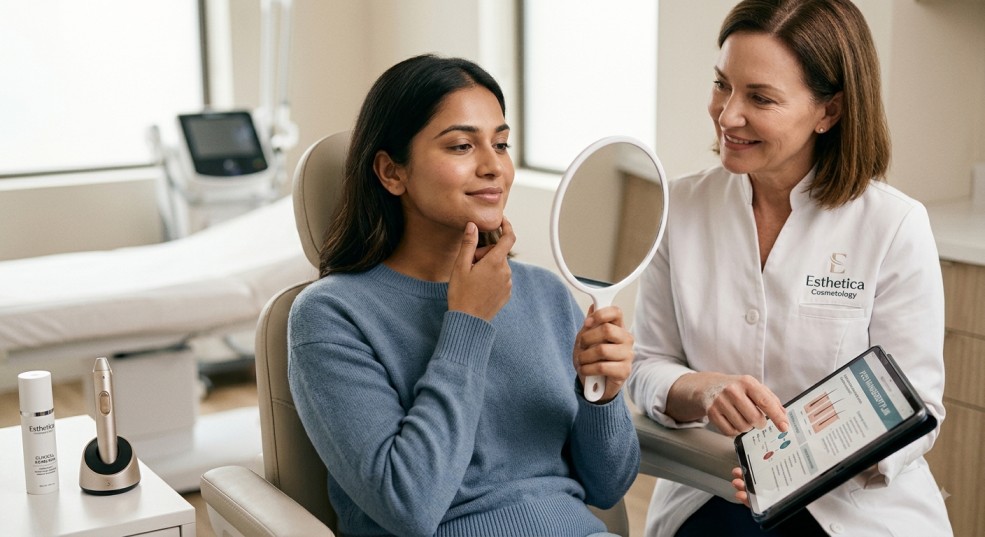
Polycystic Ovary Syndrome (PCOS) is a widespread metabolic and endocrine condition that impacts millions of women across the globe. Among its most prominent and emotionally distressing symptoms is excessive facial hair growth—medically classified as facial hirsutism. Traditional hair removal routines such as plucking, waxing, and shaving often fail to provide lasting relief, frequently resulting in painful ingrown hairs, skin dark spots, and severe inflammation. For women looking for a long-term, medically backed solution, targeted PCOS facial hair removal at Esthetica Cosmetology offers a safe, reliable, and dermatologist-supervised path to smooth, healthy skin.
In this guide, we explore the science behind hormonal facial hair, evaluate the most effective medical treatments, and outline how personalized clinical care at Esthetica Cosmetology helps manage hirsutism effectively.
Why PCOS Causes Stubborn Facial Hair Growth
Understanding why routine salon hair removal fails begins with exploring how hormonal imbalances alter hair follicles beneath the skin surface:
[Systemic Hormone Imbalance] ➔ [Higher Elevated Androgens] ➔ [Vellus to Terminal Follicle Conversion]
In typical physiological cycles, female facial hair consists predominantly of soft, translucent vellus hair (often called “peach fuzz”). However, PCOS increases androgen levels (male hormones like testosterone) produced by the ovaries and adrenal glands.
When hair follicles located on the upper lip, chin, jawline, and sideburns are exposed to continuous androgen stimulation:
Light vellus hairs transform into coarse, deeply rooted, dark terminal hairs.
Blood supply to the hair matrix increases, leading to rapid regrowth cycles.
Repetitive mechanical pulling (tweezing or waxing) causes secondary trauma, resulting in pseudofolliculitis barbae (razor bumps) and post-inflammatory hyperpigmentation.
Because the underlying cause is driven by internal biology, surface-level shaving or chemical depilatory creams only trim hair above the skin surface, leaving the active, stimulated root intact underneath.
The Science Behind Clinical PCOS Facial Hair Removal
To achieve lasting reduction, treatment must target the deeper layers of the dermis where active hair roots reside. Clinical PCOS facial hair removal using advanced medical laser technology operates on the scientific principle of Selective Photothermolysis.
Step 1: Melanin Pigment Absorbs Light Energy
Step 2: Light Energy Converts to Controlled Thermal Energy
Step 3: Heat Cauterizes Micro-Vessels at the Base of the Follicle
Step 4: Active Hair Growth Matrix is Disabled
When high-precision laser beams pass through the skin, they are absorbed selectively by the melanin (pigment) present in coarse hair shafts. This light converts into heat, disabling the hair follicle’s growth mechanism without damaging surrounding dermal tissues.
Key Medical Considerations for Hormonal Hair:
Targeting the Active Growth (Anagen) Phase: Lasers can only destroy hair roots when they are actively attached to the follicular base. Because hormonal imbalances cause hairs to enter growth phases unevenly, a structured series of spaced treatments is required.
Coarse Hair Responsiveness: Thick, dark hormonal hairs contain higher concentrations of melanin, making them excellent candidates for thermal laser destruction.
Follicle Miniaturization: Over progressive sessions, surviving follicles shrink substantially, shifting regrowing hair back into fine, barely noticeable strands.
Advanced Laser Technologies at Esthetica Cosmetology
Safe and effective facial hair reduction requires matching the right wavelength to your specific skin tone (Fitzpatrick scale) and hair density. At Esthetica Cosmetology, treatments are performed using advanced, US-FDA cleared platforms:
| Technology Type | Primary Wavelength | Ideal Skin Type | Key Clinical Advantage |
| Triple-Wavelength Diode | 755 nm + 810 nm + 1064 nm | All skin tones (Fair to Dark / Wheatish) | Combines multiple depths simultaneously; ideal for dense, mixed-depth facial hair. |
| Long-Pulsed Nd:YAG | 1064 nm | Deep / Darker Skin Tones (Fitzpatrick IV–VI) | Bypasses surface skin pigment completely, targeting deep hair roots safely without burning. |
| Alexandrite Laser | 755 nm | Light to Medium Skin Tones | Exceptional pigment absorption for dark coarse hair on fair skin backgrounds. |
What to Expect During Your Treatment Journey
Clinical Consultation & Skin Analysis ➔ Pre-Treatment Shaving ➔ In-Clinic Laser Session ➔ Post-Care Protection
1. Expert Dermatological Assessment
Your treatment plan at Esthetica Cosmetology starts with a detailed skin scan and medical intake. Our practitioners evaluate hair texture, hormonal history, skin sensitivity, and previous removal habits to calibrate precise laser pulse durations and energy settings.
2. Pre-Treatment Preparation
Stop Plucking or Waxing: Discontinue waxing, threading, or tweezing for 3 to 4 weeks before your appointment. The root must remain inside the follicle for the laser energy to channel properly.
Shave 12–24 Hours Prior: Gently shave the facial area the day before treatment. Removing surface hair prevents surface burning and concentrates maximum thermal energy directly into the subterranean root.
3. The Laser Treatment Session
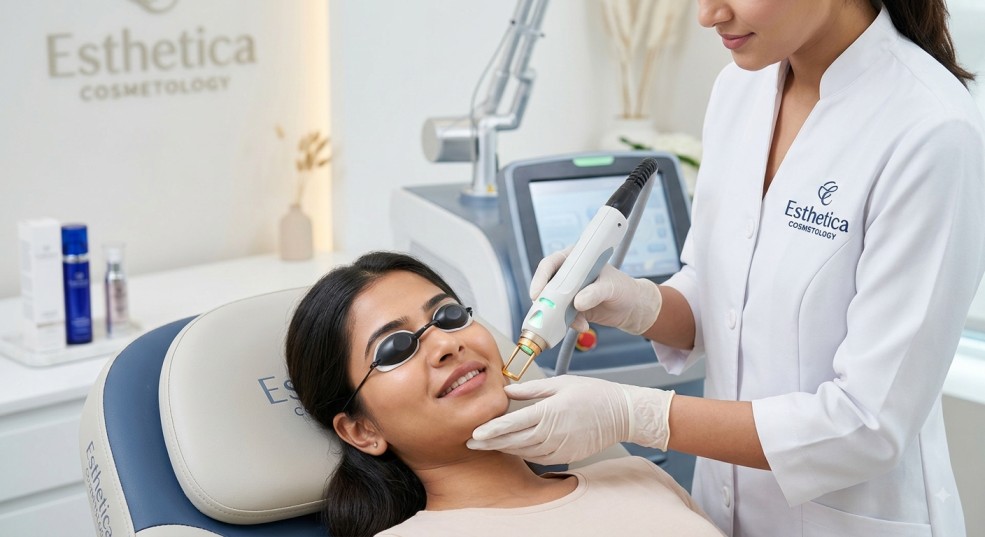
During your procedure, you will wear protective eye covers. A specialized cooling gel or built-in sapphire contact cooling tip is applied to shield the skin surface and maintain comfort. The laser handpiece glides over targeted zones, delivering swift energy pulses that feel like a light snapping sensation. A standard facial session typically takes 15 to 30 minutes.
4. Essential Aftercare Guidelines
Apply cool packs or pure aloe vera gel to calm mild, temporary post-treatment redness.
Wear broad-spectrum, non-comedogenic SPF 50 sunscreen daily to guard against sun sensitivity.
Avoid hot showers, saunas, facial steam, chemical peels, and active skincare ingredients (retinoids or exfoliating acids) for 48 hours post-session.
Long-Term Maintenance: Managing Hormonal Factors
A crucial aspect of PCOS facial hair removal is understanding how systemic hormones interact with clinical therapies.
While medical lasers effectively eliminate active, visible hair follicles, underlying androgen levels can stimulate dormant, previously inactive follicles over time. For this reason, managing PCOS hirsutism works best through a dual approach:
Internal Medical Management: Partnering with an endocrinologist or gynecologist to regulate androgen activity via lifestyle changes, anti-androgen medications (such as Spironolactone), or insulin-sensitizing treatments.
External Clinical Hair Reduction: Utilizing Esthetica Cosmetology’s state-of-the-art laser treatments to control active hair density.
While standard hair removal clients may complete treatment in 6 to 8 visits, women with PCOS typically benefit from 8 to 12 initial sessions, followed by periodic maintenance treatments (1 or 2 times a year) to preserve a clear complexion.
Frequently Asked Questions (FAQs)
Does PCOS facial hair removal cause hair to grow back thicker?
No. When performed by certified professionals using proper clinical fluences, laser treatments do not stimulate thicker hair growth. Instead, they weaken the hair bulb, causing regrowing hair to be lighter, finer, and less dense.
How many sessions of PCOS facial hair removal will I need?
Because hormonal hair growth occurs in uneven cycles, most clients with PCOS require 8 to 12 clinical sessions spaced 4 to 6 weeks apart to achieve up to 85%–90% long-term reduction, followed by minimal annual touch-ups.
Is laser-based PCOS facial hair removal safe for delicate skin?
Yes. Medical-grade lasers feature built-in cooling systems designed specifically to protect sensitive facial skin. Energy penetrates only a few millimeters into the dermis to target hair roots, leaving deeper skin layers completely unaffected.
Can laser treatment help with PCOS-related ingrown hairs and dark spots?
Absolutley. By destroying the hair follicle at the root, laser therapy halts the cycle of ingrown hairs and razor bumps. Over time, as mechanical irritation from shaving or plucking stops, post-inflammatory dark spots fade, improving overall skin tone and texture.
Why Choose Esthetica Cosmetology for PCOS Hair Care?
Managing facial hirsutism requires dedicated medical expertise, flexible treatment options, and advanced technologies tailored to sensitive hormonal skin.
At Esthetica Cosmetology, located in Phase-11 Mohali (serving the entire Tricity area), our compassionate team provides customized treatment plans designed specifically around your unique hormonal profile and skin tone.
Reclaim your comfort and skin confidence today. Visit www.estheticacosmetology.com to schedule your specialized clinical consultation for PCOS facial hair removal.