

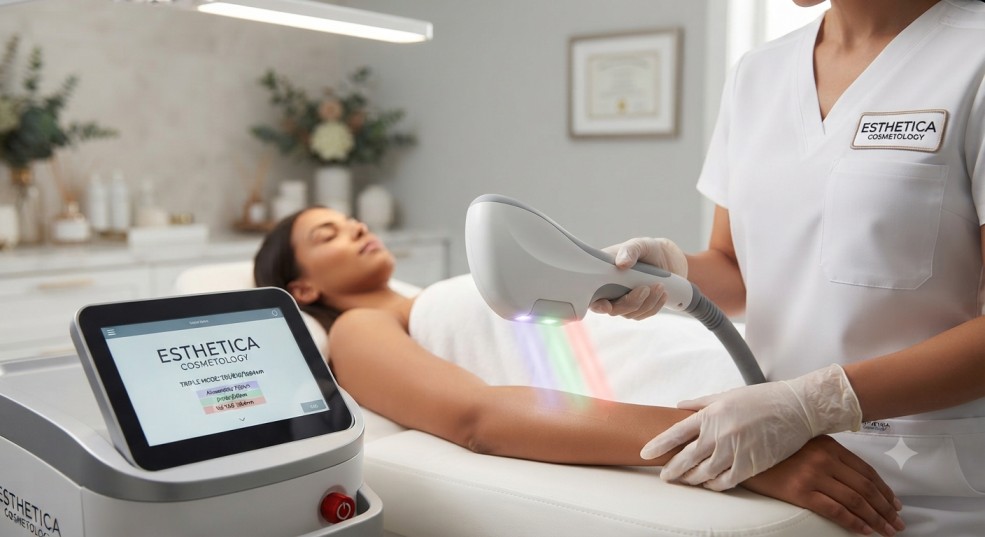
The aesthetic technology landscape is evolving at a lightning-fast pace. If you own or manage a modern clinic, staying ahead of the curve means investing in equipment that delivers superior client satisfaction, safety, and efficiency. When it comes to permanent hair reduction, practitioners are constantly weighing their options. Should you stick with a traditional single-wavelength device, or is it time to upgrade to advanced multi-wavelength systems?
Here at Esthetica Cosmetology, we believe that understanding the science behind your treatment modalities is the key to unlocking exceptional clinical outcomes. Today, we are diving deep into the comparison between single-wavelength and multi-wavelength platforms, focusing heavily on why triple wavelength diode laser hair removal is rapidly becoming the gold standard for progressive clinics worldwide.
Understanding Laser Hair Removal Fundamentals
Before comparing machine types, it helps to review how laser hair reduction works. Laser systems emit a specific beam of concentrated light that is absorbed by the melanin pigment inside the hair follicle. This light energy converts into heat, damaging the follicle’s growth centers and inhibiting future hair growth without harming the surrounding skin.
However, human hair and skin are diverse. Melanin concentration varies wildly depending on body part, ethnicity, and sun exposure. Furthermore, hair follicles reside at different depths beneath the skin—some sit superficially, while others anchor deep in the subcutaneous tissue.
Expert Insight: No single wavelength treats every skin type and hair depth with equal efficiency. This biological reality drives the need for customizable, advanced solutions.
The Contenders: Single-Wavelength Technologies
Traditional lasers operate on a single frequency of light. Each classic wavelength has distinct properties:
Alexandrite Wavelength (755nm): Highly absorbed by melanin, making it exceptionally effective for fine, light-colored hair on Fitzpatrick skin types I–III. However, its high melanin absorption also increases the risk of epidermal burns on darker skin tones.
Diode Wavelength (810nm): The workhorse of the industry. It offers a balanced melanin absorption rate, deeper skin penetration, and high repetition rates, making it safe and effective for darker skin types (Fitzpatrick IV–V) and medium-depth follicles.
Nd:YAG Wavelength (1064nm): Characterized by the lowest melanin absorption and deepest penetration into the dermis. It is the safest choice for deeply pigmented skin (Fitzpatrick VI) and targets deeply embedded follicles like those found on the back or scalp.
While these single-wavelength devices have served the industry well, relying on just one requires practitioners to swap equipment or turn away clients whose skin or hair profiles fall outside the machine’s optimal range.
The Power of Triple-Wavelength Diode Laser Hair Removal
Why settle for one tool when you can harness three simultaneously? Triple wavelength diode laser hair removal platforms combine the 755nm Alexandrite, 810nm Diode, and 1064nm Nd:YAG wavelengths into a single, cohesive handpiece emission.
By merging these three distinct spectrums, clinics can address multiple tissue depths and chromophores at the exact same time during a single pass.
How Different Wavelengths Penetrate Hair Depths
The secret to the success of triple wavelength diode laser hair removal lies in tiered dermal penetration:
Superficial Penetration (755nm): Targets the upper bulge of the follicle, ideal for superficial hairs and lighter tones.
Mid-Dermal Penetration (810nm): Focuses on the bulb and root of the hair shaft, hitting average-depth follicles with maximum power.
Deep Dermal Penetration (1064nm): Reaches deep into the vascular network supplying the dermal papilla, securing results on stubborn, deep-seated hair roots.
Comprehensive Comparison: Single vs. Triple Wavelength
To help you visualize the operational differences, consider the following breakdown:
| Feature | Single-Wavelength Lasers | Triple-Wavelength Diode Systems |
| Skin Type Versatility | Restricted to specific Fitzpatrick ranges per device. | Safe and effective across all skin types (I to VI). |
| Hair Thickness Range | Best for either fine or coarse hair, rarely both equally. | Handles fine vellus hair and thick terminal hair seamlessly. |
| Treatment Speed | Moderate; may require multiple device setups for diverse clientele. | High efficiency; treats diverse profiles in a single session. |
| Client Comfort | Variable depending on the single frequency’s heat concentration. | Even thermal distribution minimizes localized discomfort. |
Why Clinics Are Making the Switch with Esthetica Cosmetology
Adopting cutting-edge equipment transforms how a business operates. Practitioners utilizing multi-wavelength technology report significant operational advantages:
Maximized ROI: Instead of purchasing three separate machines to cater to different demographics, a single multi-wavelength platform covers your entire clientele base.
Reduced Treatment Times: Delivering three optimized wavelengths concurrently shortens session lengths while boosting clinical efficacy.
Enhanced Client Trust: Providing virtually painless, highly effective treatments across all skin tones builds unmatched brand loyalty and positive word-of-mouth.
At Esthetica Cosmetology, we emphasize that investing in superior technology directly correlates with elevated client retention and practice growth.
Frequently Asked Questions
Is triple wavelength diode laser hair removal safe for dark skin tones?
Yes, absolutely. The inclusion of the 1064nm Nd:YAG wavelength bypasses upper epidermal melanin, making it exceptionally safe for darker or tanned skin types without compromising efficacy.
How many sessions are typically required for permanent results?
Most clients achieve a 80% to 90% permanent reduction after a course of 6 to 8 sessions, spaced about 4 to 6 weeks apart, aligning with the active anagen growth phase of hair follicles.
Does multi-wavelength treatment hurt more than traditional lasers?
Not at all. In fact, advanced triple wavelength diode laser hair removal systems utilize sophisticated contact-cooling tips that protect the epidermis and disperse heat evenly, resulting in a much more comfortable experience for the client.
Conclusion
The debate between single and multi-wavelength systems is settled by the demand for versatility, safety, and speed. While traditional devices paved the way, triple wavelength diode laser hair removal represents the pinnacle of modern aesthetic engineering. By integrating Alexandrite, Diode, and Nd:YAG frequencies into unified treatments, clinics can confidently service any client who walks through the door.
To explore how you can elevate your practice standards and integrate state-of-the-art modalities into your service menu, connect with the experts at Esthetica Cosmetology today.