

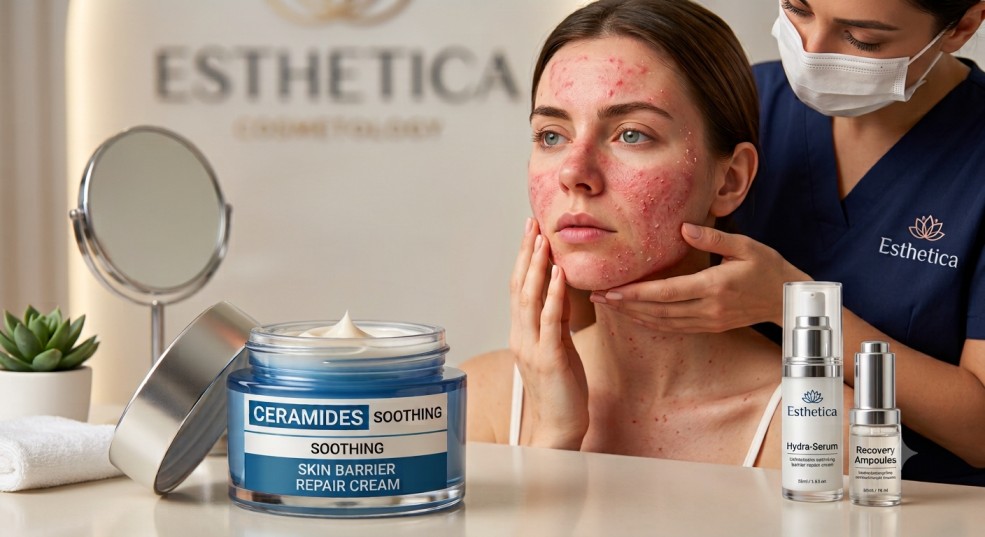
In the pursuit of glowing, smooth skin, it is easy to fall into the trap of thinking that more is always better. We all love that immediate post-exfoliation brightness, but if you have been feeling persistent tightness, stinging, or redness lately, you might be dealing with the consequences of an over-processed complexion. If you are struggling to repair a damaged skin barrier from over-exfoliation, you have come to the right place. Your skin barrier—the outermost layer of your skin that acts as a protective shield—is delicate. When pushed too hard with aggressive chemical acids, harsh physical scrubs, and exfoliating tools, that shield cracks, leading to moisture loss, inflammation, and chronic sensitivity.
At Esthetica Cosmetology, we see these symptoms frequently. The good news is that with the right, science-backed approach, your skin can return to a healthy, resilient state.
Recognizing the Signs of a Compromised Skin Barrier
Before you can effectively repair a damaged skin barrier from over-exfoliation, you must recognize the warning signs. Your skin is essentially shouting for help when you experience:
Persistent Redness: Skin that looks pink, raw, or inflamed without any obvious external trigger.
Tightness and Dryness: A sensation that your skin is “too small” for your face, even immediately after applying a heavy moisturizer.
Stinging or Burning: Products that previously felt soothing now cause an intense stinging sensation upon contact.
Increased Breakouts: A compromised barrier cannot keep bacteria or environmental pollutants out, often leading to unexpected, painful flare-ups.
Flaky Texture: Despite your best efforts to exfoliate the flakes away, they keep returning because the underlying skin is not being given time to heal.
The Science Behind the Damage
Your skin’s barrier, known as the stratum corneum, is composed of cells and lipids (fats) that act like bricks and mortar. When you over-exfoliate, you are essentially knocking down the “bricks” and washing away the “mortar.” This allows moisture to escape (Transepidermal Water Loss) and leaves your nerve endings exposed. Understanding this mechanism is the first step when you decide to repair a damaged skin barrier from over-exfoliation properly.
The Path to Recovery: A Step-by-Step Guide
Recovery is not about adding more products; it is about subtraction, patience, and gentle protection. Follow this protocol to restore your natural glow:
1. The “Less is More” Rule (Stop All Actives)
Immediately cease all active exfoliants. This includes AHAs (Glycolic, Lactic, Mandelic acid), BHAs (Salicylic acid), PHAs, physical scrubs, facial brushes, and retinoids. Your skin needs a total vacation from these “active” ingredients for at least 2–4 weeks to begin the healing process.
2. Simplify Your Skincare Routine
Strip your routine back to the bare basics:
Morning: A very gentle, pH-balanced, non-stripping cleanser, a hydrating serum (like pure Hyaluronic Acid), and a nourishing, fragrance-free moisturizer. Follow with a mineral-based sunscreen.
Evening: Double-cleanse only if you wear makeup (use a mild cleansing balm), followed by the same hydrating serum and a heavier barrier-repair cream containing ceramides.
3. Seek “Barrier-Repair” Ingredients
Focus on ingredients that mimic your skin’s natural lipid composition:
Ceramides: The essential “mortar” that fills gaps between skin cells.
Centella Asiatica (Cica): Renowned for its calming and anti-inflammatory properties.
Panthenol (Vitamin B5): Excellent for soothing and promoting skin regeneration.
Squalane: A lightweight oil that provides deep hydration without clogging pores.
4. Protect Your Skin from UV Rays
Damaged skin is highly vulnerable to UV rays, which can worsen inflammation, delay healing, and lead to post-inflammatory hyperpigmentation. Sunscreen is non-negotiable—use a physical, mineral-based formula (Zinc Oxide or Titanium Dioxide) as these are generally less irritating for compromised skin.
5. Professional Support and Treatments
Sometimes, the barrier is so compromised that standard home care is not enough. Professional interventions like our HydraFacial treatments at Esthetica Cosmetology provide deep, controlled, and medical-grade hydration that is infinitely gentler than manual exfoliation. We can also provide a professional skin assessment to ensure no underlying conditions are exacerbating your sensitivity.
Frequently Asked Questions (FAQs)
Q: How long does it take to repair a damaged skin barrier from over-exfoliation? A: Depending on the severity of the damage, it typically takes anywhere from 2 to 6 weeks for the skin barrier to fully regenerate. Consistency in avoiding harsh products is the key to faster healing.
Q: Can I use Vitamin C while my skin is damaged? A: It is generally recommended to pause all potent actives, including Vitamin C (ascorbic acid), until your skin no longer feels stinging or raw. Once healed, reintroduce it slowly.
Q: Is “slugging” helpful for a damaged barrier? A: Slugging—applying an occlusive like petroleum jelly as the final step at night—can be very effective for dehydrated, damaged skin as it prevents moisture loss. However, avoid it if you are prone to acne.
Why Choose Esthetica Cosmetology?
At Esthetica Cosmetology, we understand that skin health is unique to every individual. If your skin remains inflamed, itchy, or painful after two weeks of a simplified routine, it is time to consult with our experts. We specialize in skin rejuvenation and barrier repair, ensuring you receive a recovery plan that restores your natural beauty safely.
Your skin is a living, breathing organ that knows how to heal itself—it just needs the right environment. By stepping back and focusing on gentle, protective care, you can restore that radiant, healthy look you love.
Ready to get your skin back on track? If you need professional advice or a soothing, restorative treatment to help your skin heal faster, book a consultation at Esthetica Cosmetology today.